
 Abraham Hyatt
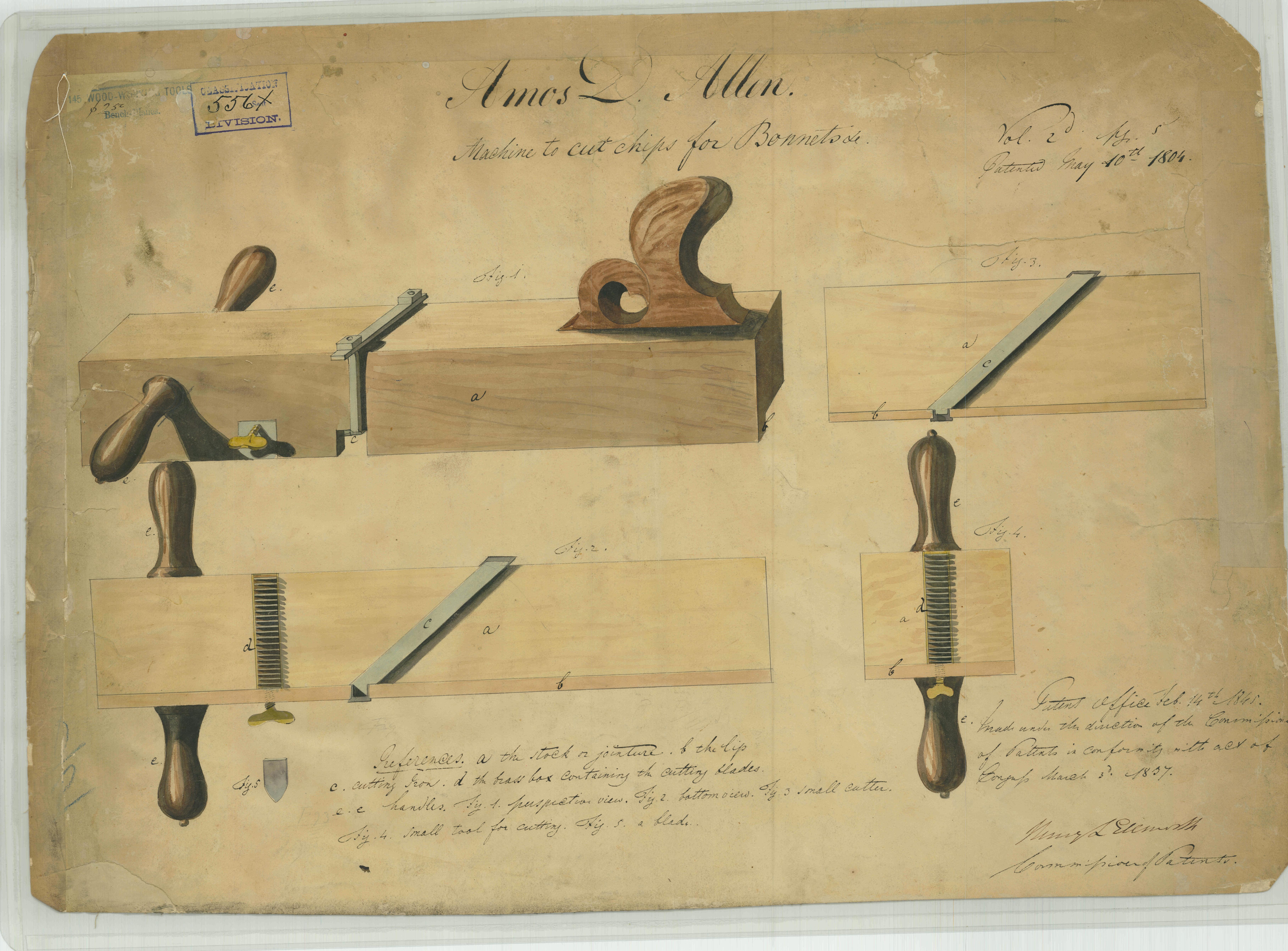 Amos Denison Allen's 1804 patent (X-556) for a chip plane, which made wood strips used in hat and bonnet making.
Amos Denison Allen must have felt pretty productive as he tallied up his account book in January 1803. His furniture shop in Windham, Connecticut, had filled 357 orders over the previous six years, including 799 chairs, 51 Pembroke tables, 40 bedsteads, 37 bureaus, 35 chests, 19 dining tables, and 16 kitchen tables (see full list in the notes). When one of those chairs sold for $27,400 in 2008, it was described as “one of the great examples of Connecticut Windsor chair making.” Allen wasn’t only a prolific chairmaker, he was also a prolific inventor. In 1804, he obtained four different patents, including the first known patent for a plane.1
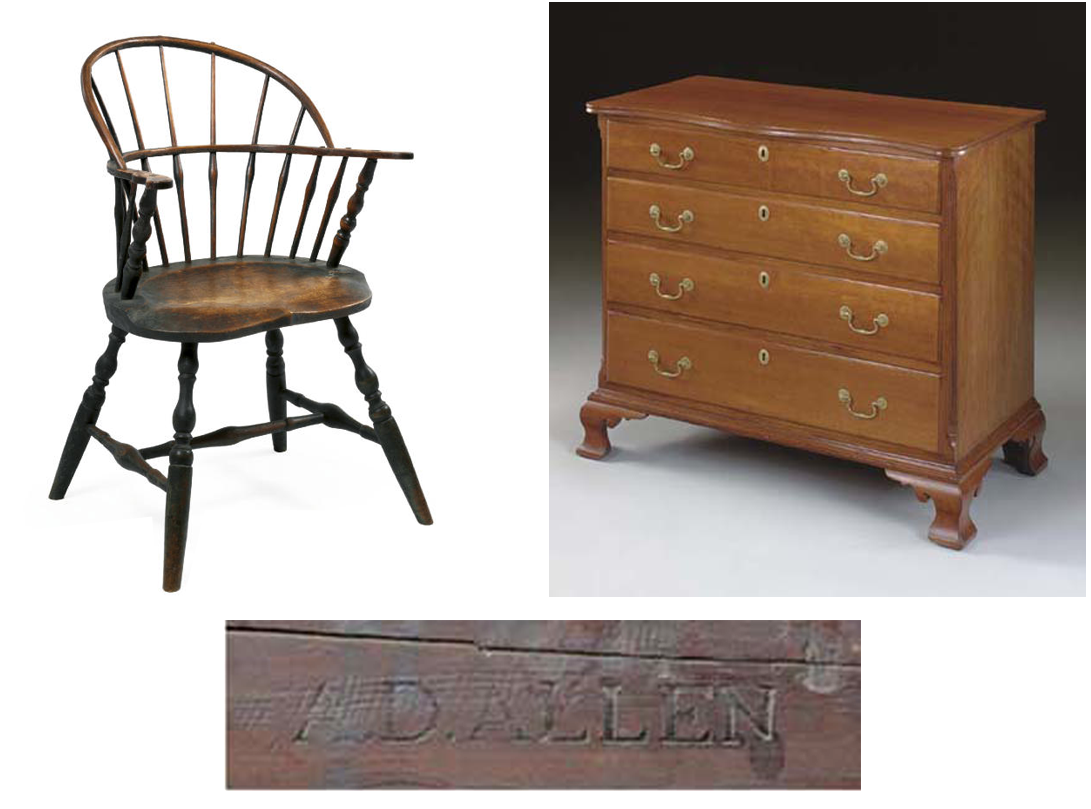 A chair and chest of drawers made by A.D. Allen. They sold for
 His patent was for a chip plane, which cut strips of wood used in hat and bonnet making. The patents were serious business for Allen. In June 1804, he took out a newspaper ad threatening legal action against anyone who made or sold one of his inventions. Allen also made wood type and “invented many curious machines for cutting the type and greatly improved the process of their manufacture,” according to a history of Windham published in 1864. He was also credited with the invention of “the Education Tables, used in schools.” He died in 1855 at the age of 81. While his account book for his furniture making, which covers 1796 to 1803, are full of details about who bought the pieces his shop created, there are no entries that indicate he actually made or sold planes.2
Allen’s patent is the first known plane patent, but we’ll likely never know who filed the actual first patent in the US for a plane. Nearly 10,000 patents dating back to 1790 were destroyed when the Patent Office burned down in 1836. After the fire, Congress put out a call for patentees to send in their personal copies. These recovered patents are now known as “X-patents.” Only about 2,800 X-patents have been reconstructed (often just a name, date, and title) in the ensuing years. There are currently eight plane X-patents.
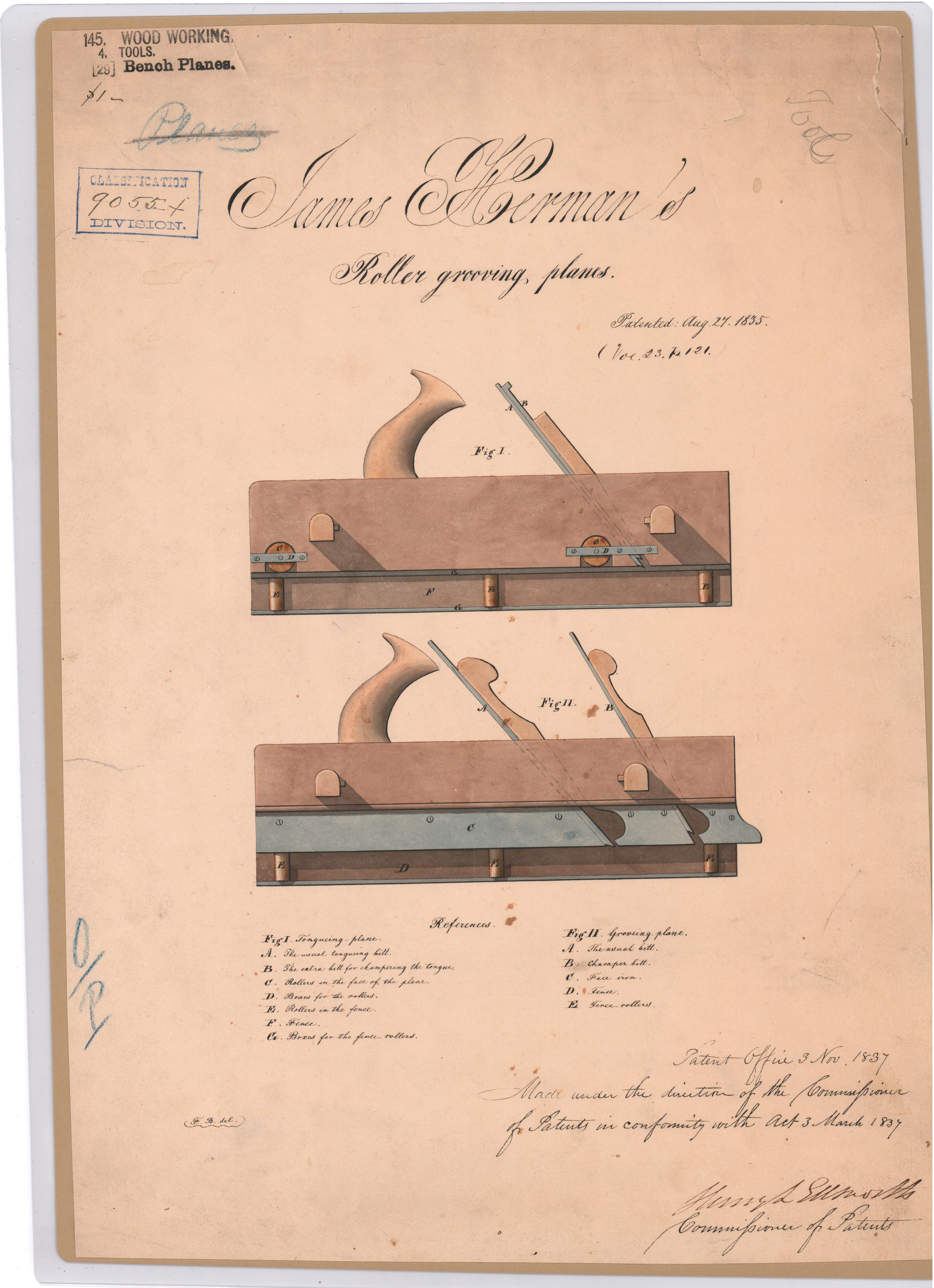
 Israel White's 1834 X-7951 patent for the first known three arm plow plane. There are fewer than a dozen existing planes based on the patent. A pristine example with ivory-tipped ebony arms sold at David Stanley Auctions for $31,798 in 2012.
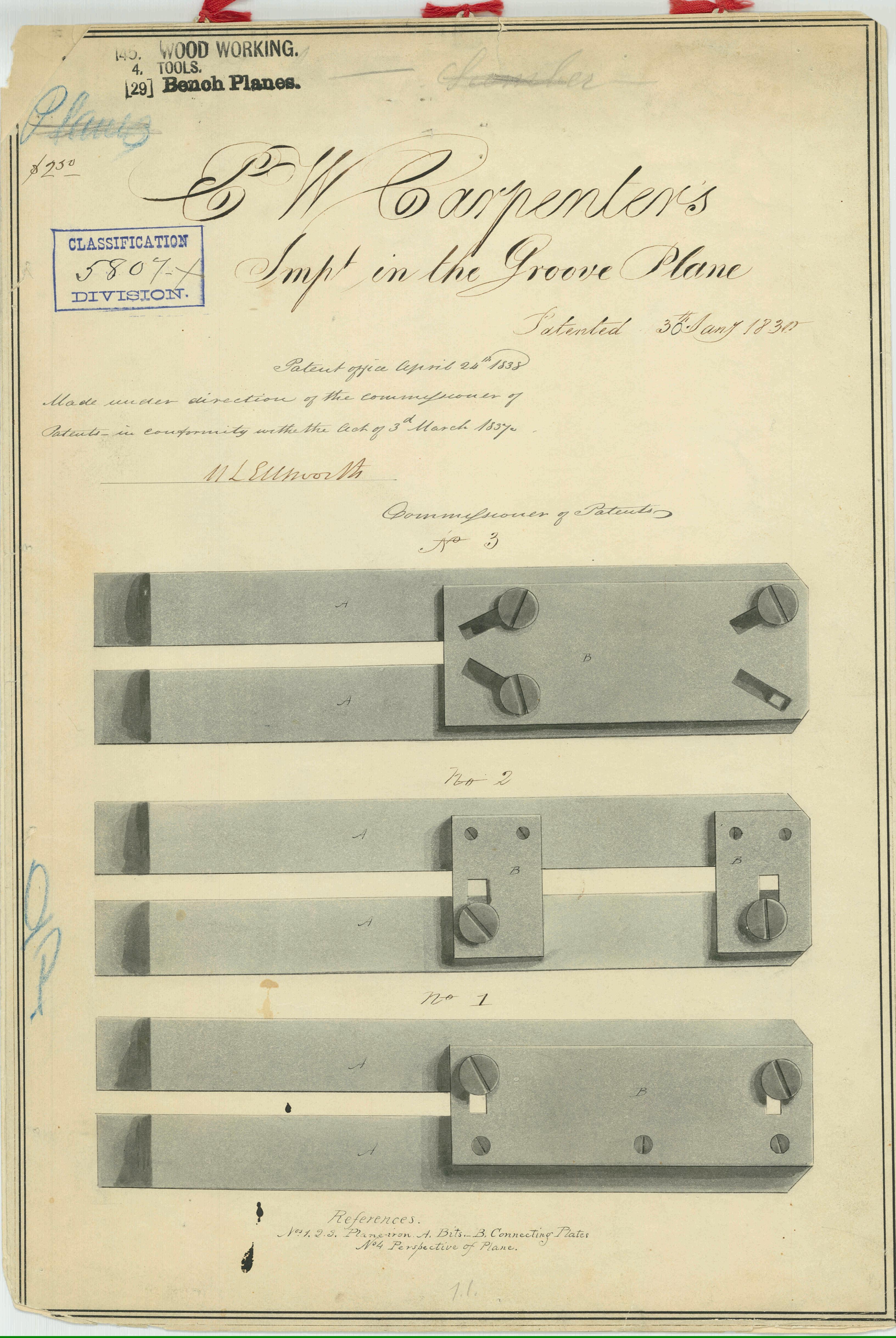
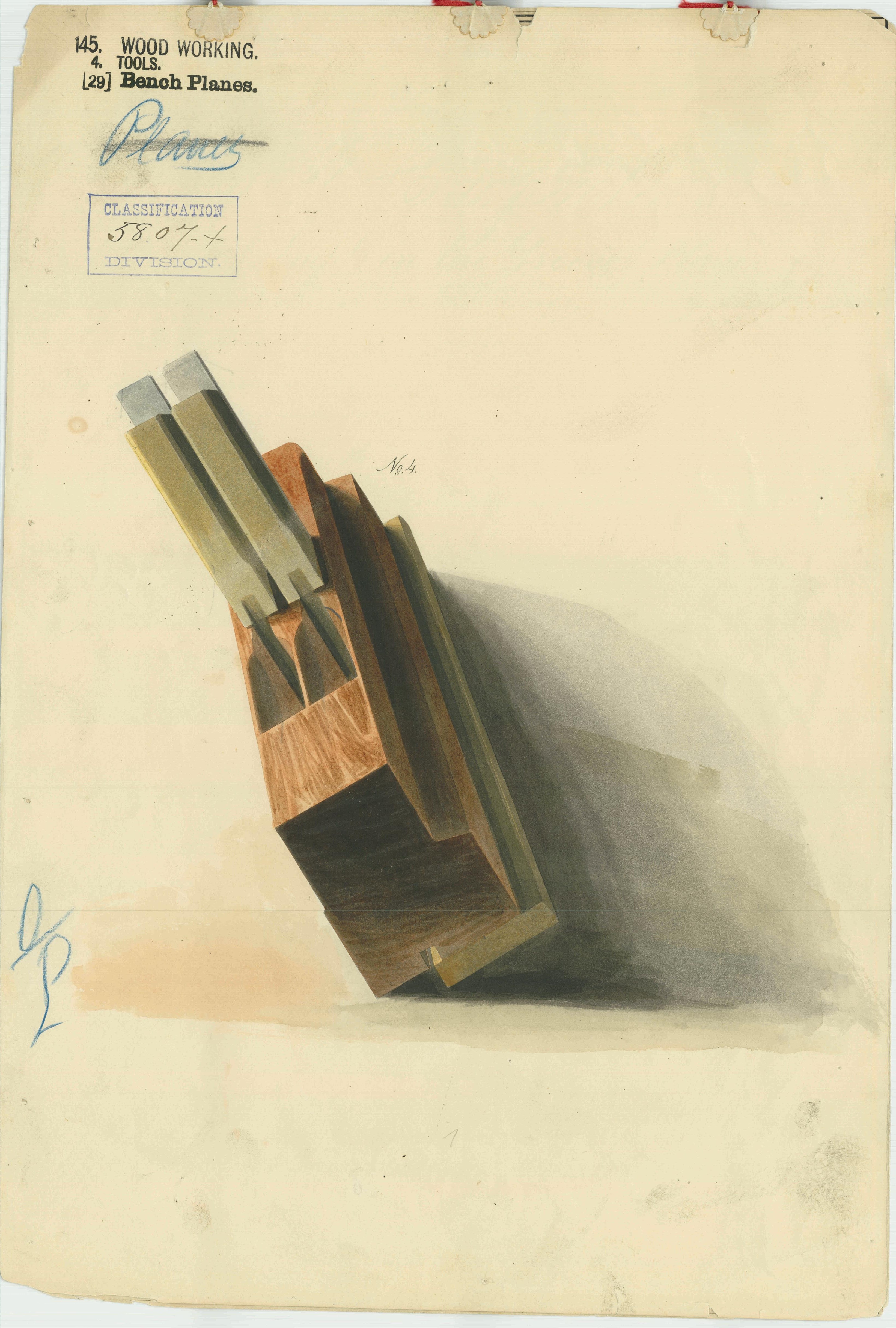
Very few patented planes ever made it to market. Most were complex solutions to non-existent or very minor problems. I mean, look at this beautiful, ridiculous thing. The few patented planes that were made and survive are catnip for collectors. An Israel White plow with ivory-tipped ebony arms sold at David Stanley Auctions for $31,798 in 2012. A plow based on Samuel Piper’s 1881 patent went for $10,235 at a Brown Tool Auction in 2023. An E. W. Carpenter plow (illustration below) sold for nearly $9,000 six years ago. And, of course, there’s the legendary Sandusky Tool Co. plow based on Harmon Vanbuskirk’s center wheel patent that sold for $114,400 in 2004.
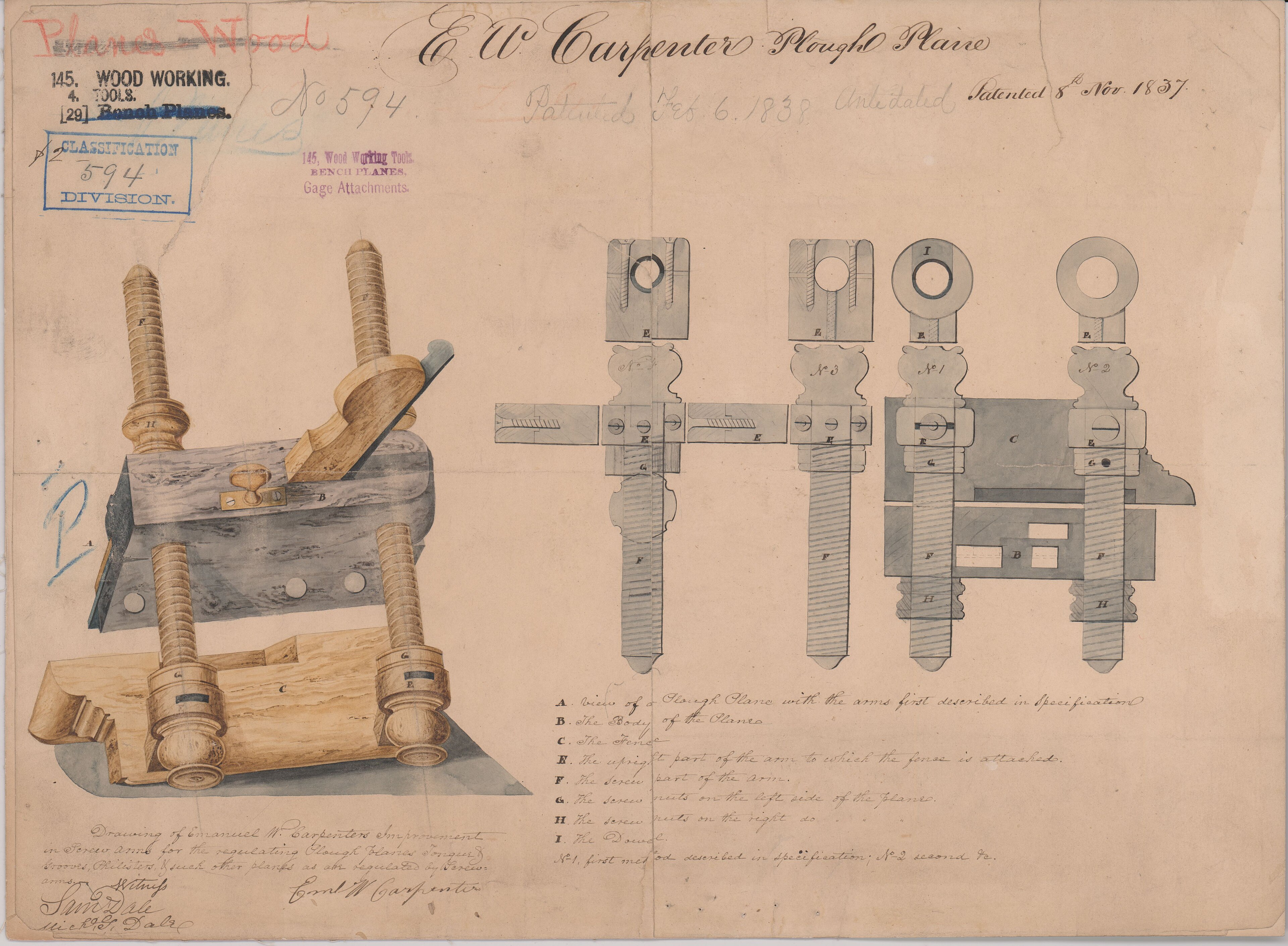 Emanuel W. Carpenter's 1837 patent (594) for a "method of constructing the screw-arms for all kinds of planes regulated with screw-arms." One of these planes sold at Brown Tool Auctions for $15,950 in 2005.
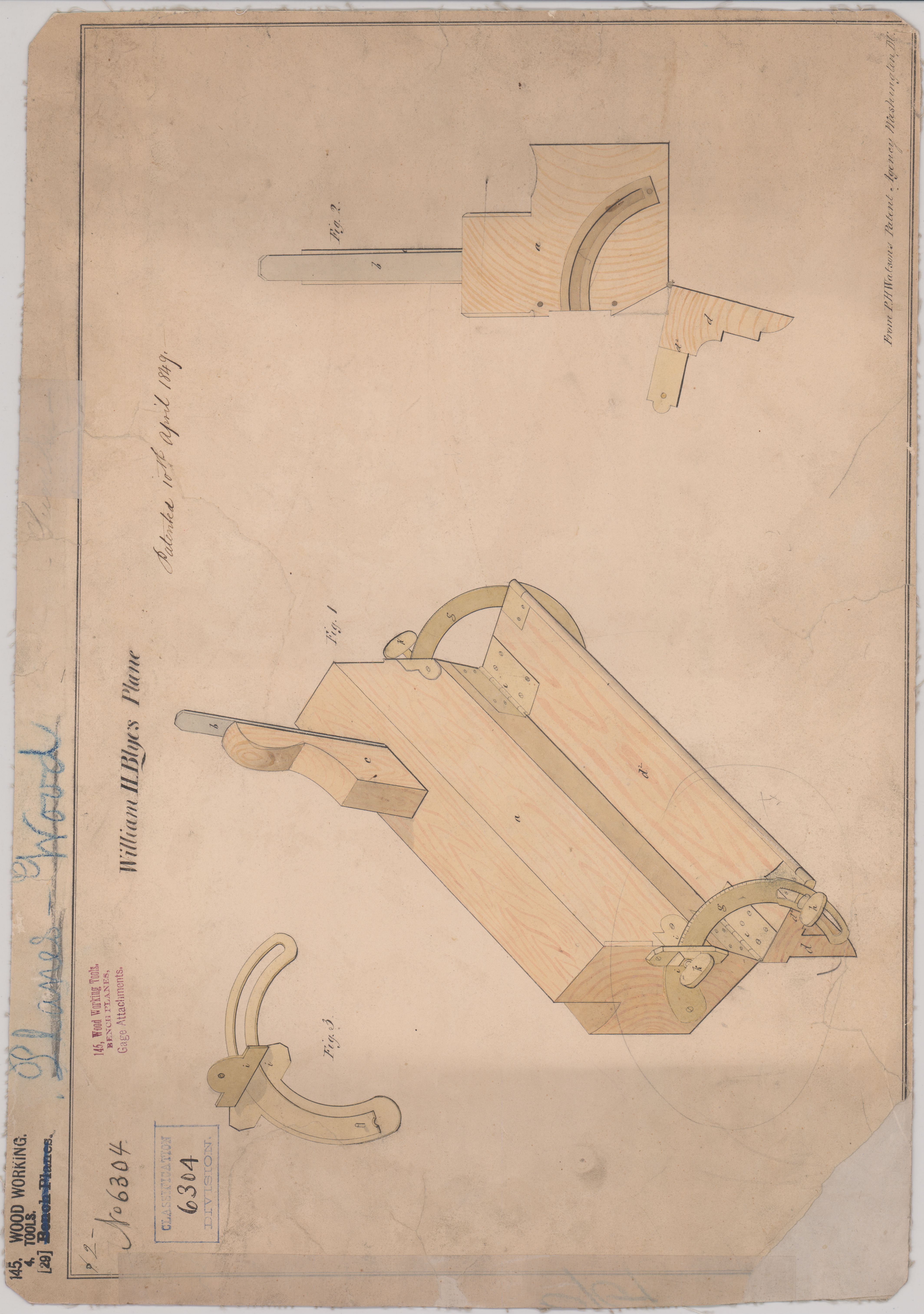 William H. Blye's 1849 "plane for beveling edges" (6304).
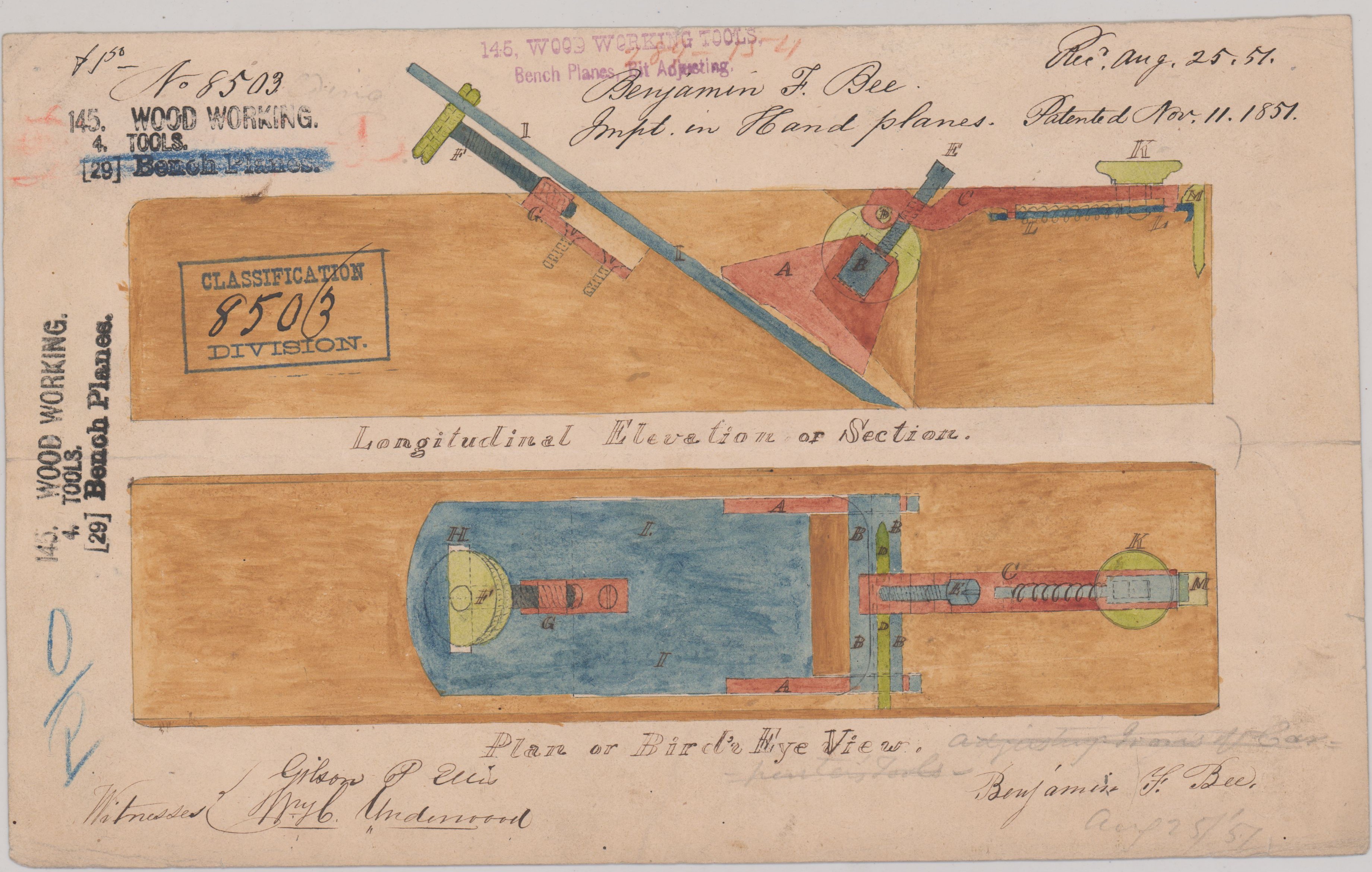 Benjamin F. Bee's 1851 patent (8503) for a mechanism that adjusts the iron. It's the only illustration I've found that's colored in like this. The pdf is much clearer.
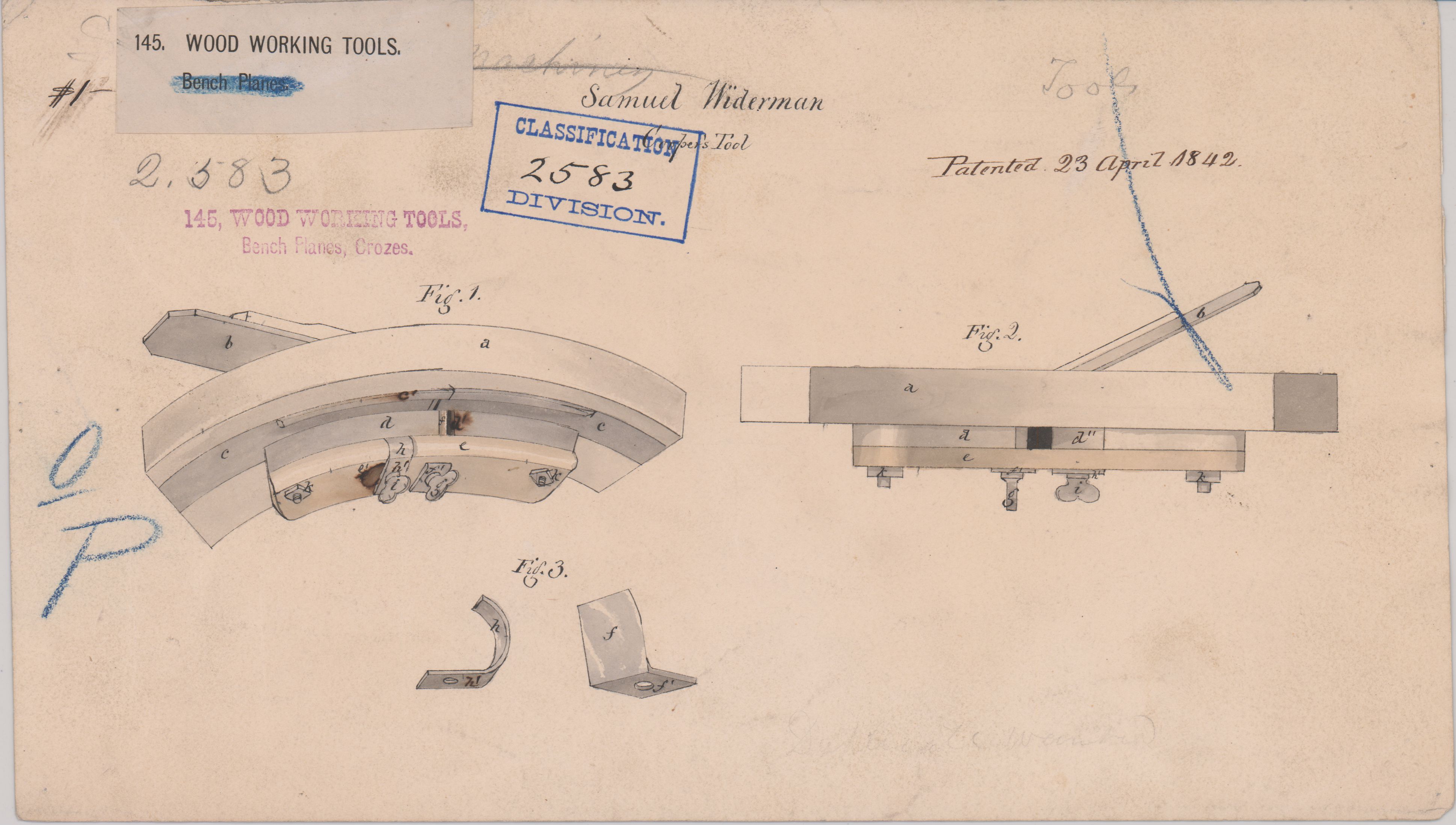 Samuel Widerman's 1842 patent (2583) for a "machine for chamfering, beveling, and howeling barrels, etc."
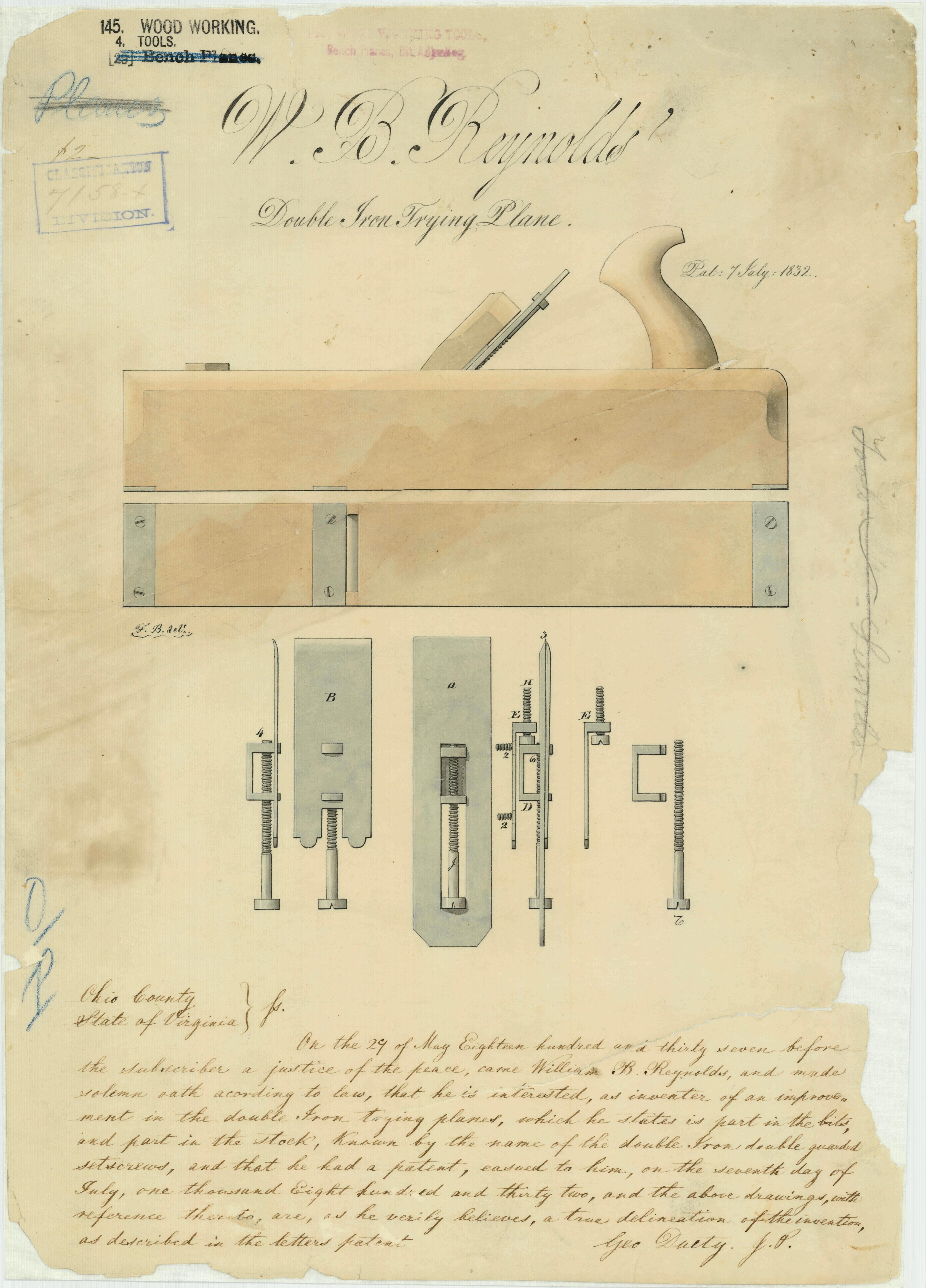
 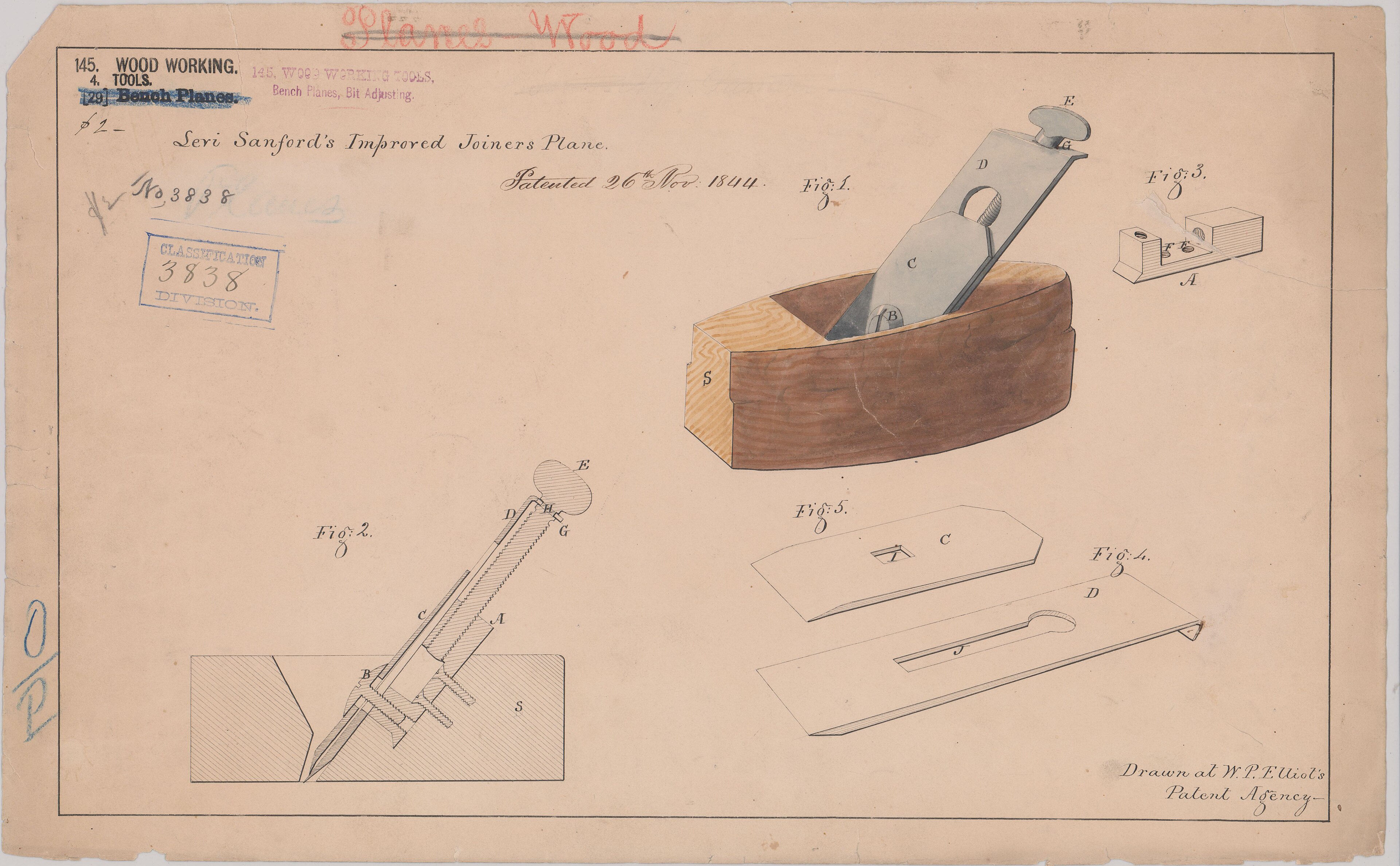 Levi Sanford's 1844 patent for a "method of setting bits in bench planes" (3838) is very similar to Reynold's 1832 X-patent above.
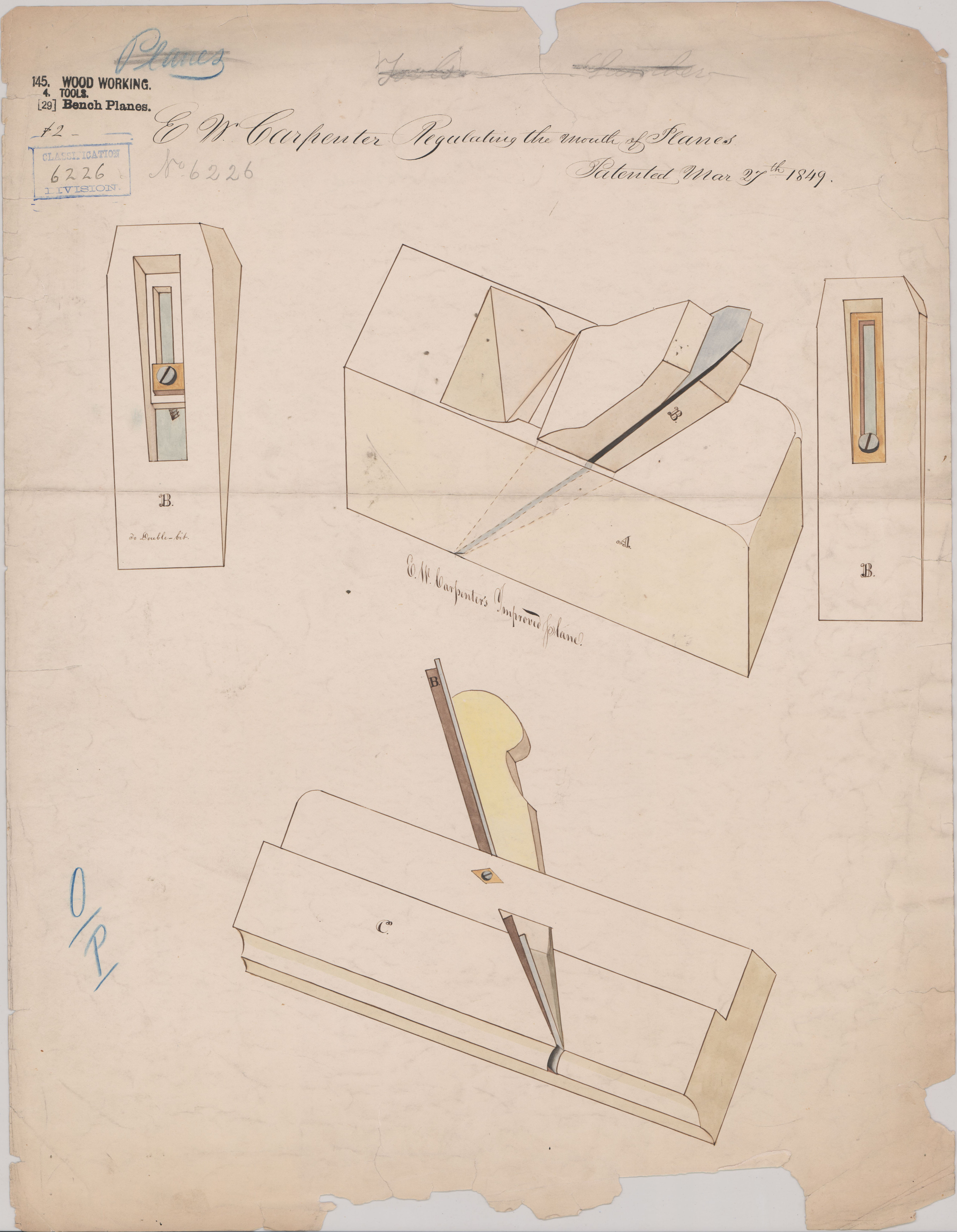 One more Emanuel W. Carpenter patent, this one for "adjusting the position of plane-irons and regulating the throats of planes" (6226).
All of the patent images in this story come from the National Archive’s Records of the Patent and Trademark Office, 1836–1978.
Interested in more stories about plane patents?

- The Famous Windsor Chair Maker Who Held the 'First' Plane Patent
- Why Did an Arsonist Keep Setting This Planemaker's Shop on Fire?
- Glass Has to be the Worst Material to Make a Plane From
- What Was in Sandusky's Secret Plane Making Room?
-
Houghton Bulkeley, Contributions to Connecticut Cabinet Making (The Connecticut Historical Society, 1967) 45-50. Allen’s output from 1796 to 1803: 799 chairs, 51 Pembroke tables, 40 bedsteads, 37 bureaus, 37 candle stands, 35 chests, 19 dining tables, 16 kitchen tables, 14 portrait frames, 8 chests (2-drawer), 8 clock cases, 6 plain tables, 6 desks, 5 chest-on-chests, 2 cradles, 1 sideboard (inlaid), 1 secretary, 1 inlaid looking glass, 1 book case, 1 school master’s desk. He grouped his chairs into 10 categories; Bulkeley thinks they were all Windsor-style chairs: 291 dining chairs, 156 fanback chairs, 94 fancy chairs, 85 kitchen chairs, 68 armed chairs, 40 rocking chairs, 30 fancy chairs with cushions, 18 “york” chairs, 14 dining chairs with cushions, 3 writing chairs. described as: See Charles Santore’s Lot Essay at Christies. ↩
-
legal action: “Patent Chip,” Hartford Courant, June 20, 1804, 3. history of Windham: William L. Weaver, History of Ancient Windham Ct. Genealogy (Weaver and Curtis, 1864), 33. ↩