
 Abraham Hyatt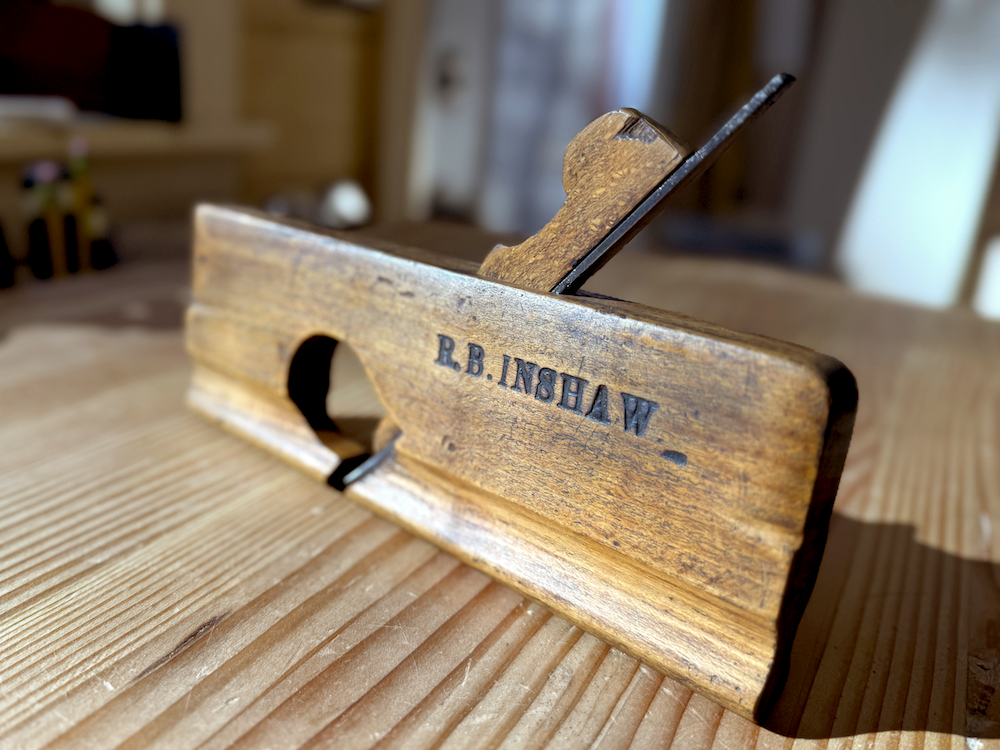
Richard Bates Inshaw was already known as one of the best arms engravers in the country by the time he moved to Chicopee, Massachusetts, in 1836. Inshaw was born in England and likely apprenticed under his father, who was also a gunsmith and engraver. In 1830, he immigrated to New York City, where he set up shop making and engraving arms with his brother. Six years later, he moved to Chicopee to work for Allen and Ball, a small gun making firm. By then, Inshaw had attracted the attention of the brothers who founded the Ames Manufacturing Company, with one of them writing that they needed to “secure [Inshaw] if possible as we will unquestionably want his work.” Ames went on to become a major arms maker, manufacturing artillery, swords, and side arms for the Army’s Ordnance Department during the Civil War.1
 Richard B. Inshaw. Source: Chicopee Illustrated.
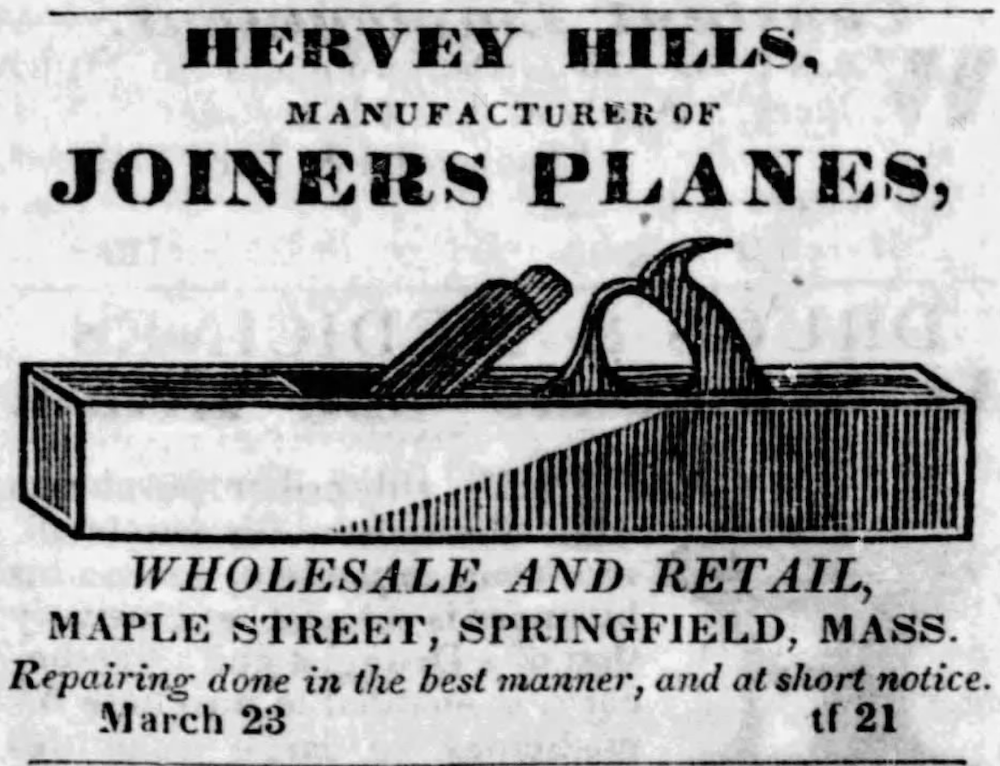
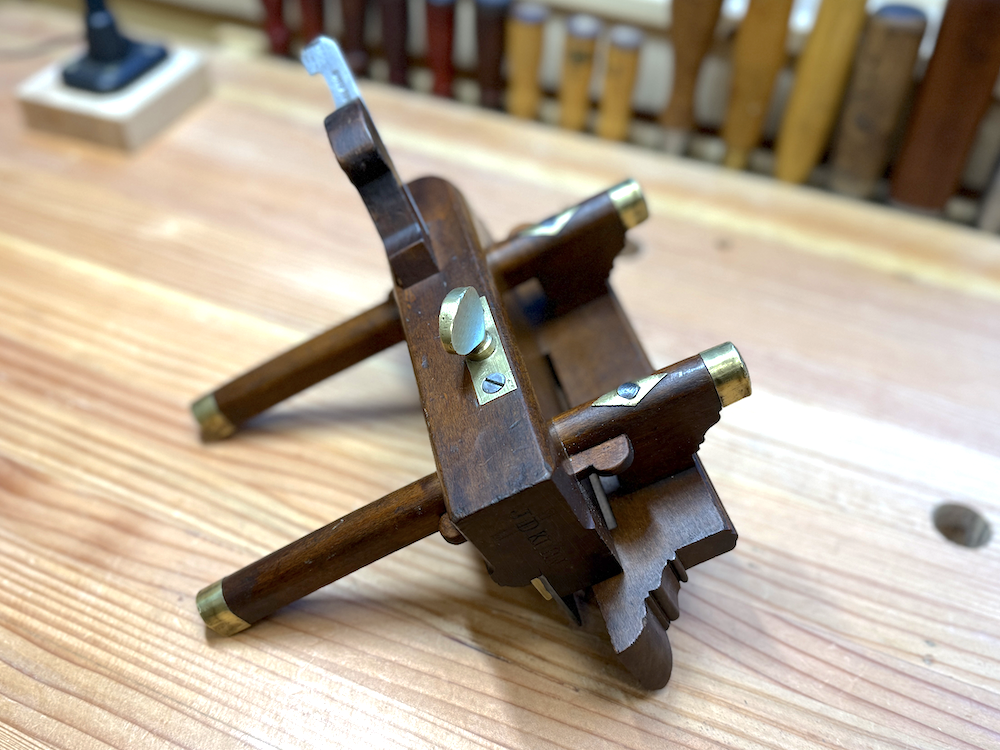
Inshaw oversaw the Ames fine engraving department until he left the company around 1850 to start his own business. Over the years, Inshaw also did freelance engraving work for the Samuel Colt company (on the first pistols the firm made in the 1830s), the Springfield Arms Company, and the Massachusetts Arms Company. Today, his work as an engraver is highly prized by modern collectors. Around the time Inshaw moved to the U.S., Hervey Hills began making planes in Springfield, which sits adjacent to Chicopee. He worked as part of several partnerships until 1844 when he began manufacturing planes under his own name. At some point before Hills closed up shop in 1851, he made a gunstocker plane that was owned by an R. B. Inshaw (see top photo).2
Gunstocker planes are a curious tool. A gunstock is the wooden part of a rifle that forms the butt and supports the barrel. The shape of a gunstocker plane seems to imply they cut the groove the barrel sits in, but they actually had a very limited role in gunsmithing. Most of the work creating that groove was done with floats, rasps, chisels, and even the end of the barrel itself, which could be sharpened and used as a scraper. The planes don’t appear in planemaker catalogs and were likely custom-made. Very few historic sources mention them.3

Experiments done by the tool historians John Whelan and Herb Kean about 15 years ago found that historic gunstocking methods didn’t require specialty planes. But there was one specific use case where a gunstocker would need a special plane.
“For those rifle barrels which were tapered, large amounts of wood must be removed to taper the stock groove. A plane is faster than a scraper for removing wood. Herb Kean demonstrates the obvious method for accomplishing this in [the photo below]. Taking a block of wood sized as a section of a gunstock, he grooves it first with a full round plane (semi-circle). Then using his gunstocker’s plane as you would a corebox plane, he removes wood to gradually increase the radius of the bed to match the barrel taper.”4
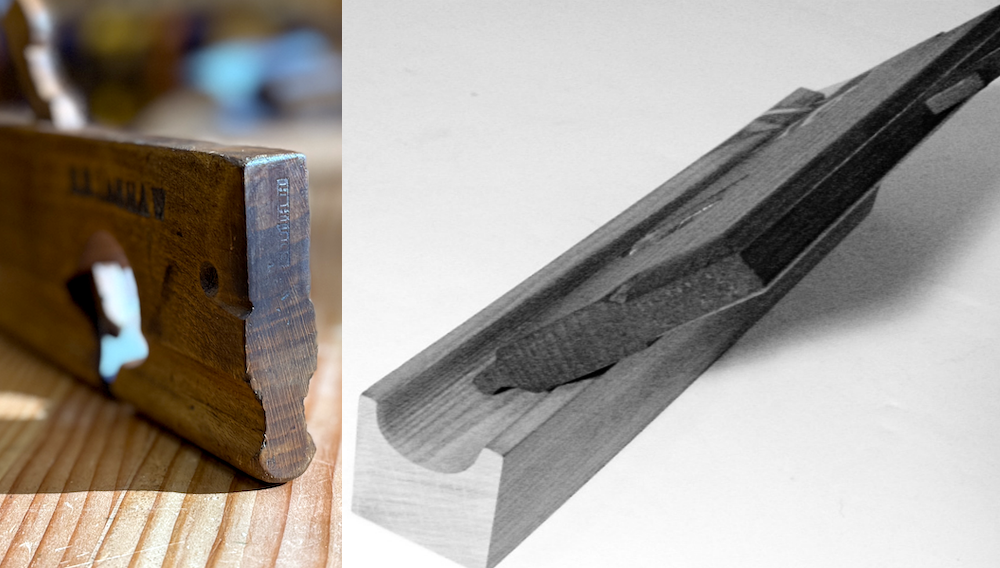 Left: A gunstocker plane's distinctive profile. Right: Herb Kean's demonstration. Source: Tool Shed.
So is R. B. Inshaw, the owner of the gunstocker plane, the same person as Richard Bates Inshaw? This is where we pit facts against speculation.
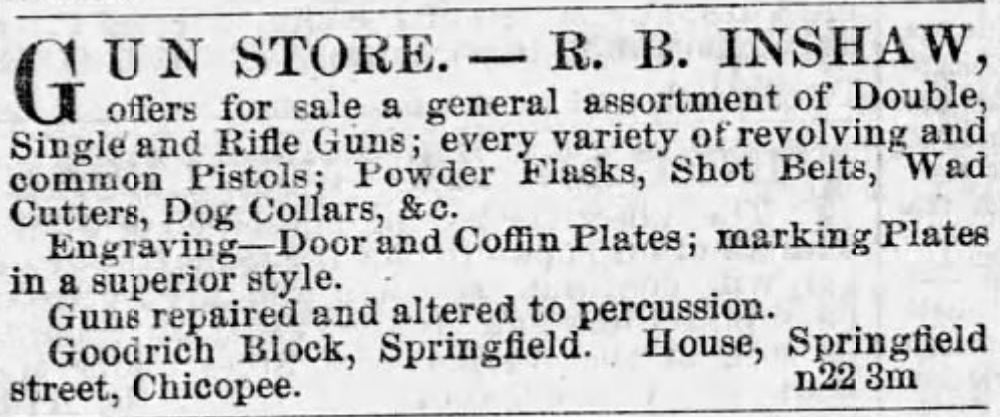
Hills’s gunstocker plane was probably custom-made for a local gunsmith; it’s a tool that only a few craftsmen in the area would use. Using census records and city directories, I’ve found only one other R. B. Inshaw: Inshaw’s son, Richard B. Inshaw Jr., who was a machinist, not a gunsmith. The fact that Hills made the plane around the time Inshaw opened his own shop makes the connection even more compelling. And while Inshaw was known as an engraver, he did all types of gunsmithing at his store. He advertised that he offered “a general assortment of Double, Single and Rifle Guns; every variety of revolving and common Pistols… Engraving—Door and Coffin Plates… Guns repaired and altered to percussion.”
Last month the Chicopee Historical Society published an excellent biography of Inshaw. I contacted them to find out if there are any known Inshaw tools with this mark. There aren’t, and the Society understandably wouldn’t venture whether this was Inshaw’s plane. I’d be surprised if it was not his. But then again, this plane has passed through the hands of an unknown number of gunsmiths over the last 175 years. Census records are incomplete. Coincidences happen. “It is no great wonder,” Plutarch once wrote, “if in long process of time, while fortune takes her course hither and thither, numerous coincidences should spontaneously occur.”
Inshaw died in 1865 at the age of 59. He left behind a remarkable body of work, including a sword that’s in the Smithsonian’s National Museum of American History, and a rifle owned by the Chicopee Historical Society that’s been described as one of the finest pre-Civil War firearms in existence. A history of Chicopee written in the late 19th century remembered him as “one of the best silver engravers in the country, a man of rare ability and taste in his artistic line.” 5
For more on gunstocker planes, see John Whelan’s “What’s A Gunstocker’s Plane?” in the June 2010 issue of the Tool Shed, and his “Gunstocker’s Plane – Followup” in the September 2010 issue. Also David G. Perch’s “The Gunstocker’s Plane,” in Plane Talk vol. 10 no. 3.
Interested in more stories about unusual planes?

- Who Stole This Solid Ivory Plow Plane?
- 'A man of rare ability and taste': A Legendary Gunsmith's Personal Gunstocker Plane
- Glass Has to be the Worst Material to Make a Plane From
- Dyed With English Dragon's Blood
- The Tiniest Planes You'll Never Use
Plow Plane Giveaway!
THE CONTEST IS OVER. A WINNER WAS CHOSEN ON 1/17/2026
I’ve been told that I’m crazy for attempting a giveaway, but I’m going to do it anyway. I have fun restoring plow planes, and instead of selling this one I want to give it away. To enter, all you need to do is submit your email address using this form. You don’t need to be a newsletter subscriber, or follow me on YouTube, Instagram, or other social media. All you have to do is drop an email address in the signup form. That’s it.
The plane was made by George Davis, a Birmingham, England, planemaker active between 1821 and 1858. His sons, and eventually his grandsons, went on to run the business in the latter half of the 19th century. The plane has the earliest mark listed in Goodman’s British Planemakers.
The giveaway will run from January 16 to February 16. On February 17, I will randomize the list of emails that have been collected. The first name on the list is the winner. The full rules are listed below and are also on the signup form. Good luck! And wish me luck, too. This might be a total shitshow.
Plow Plane Giveaway Rules
THE CONTEST IS OVER. A WINNER WAS CHOSEN ON 1/17/2026
To enter the contest, participants only need to submit a valid email address using this form. Participants do not need to be a newsletter subscriber or a follower of the Working Wooden Planes’ YouTube, Instagram, or other social media accounts.
Prize: The giveaway prize is the plow plane pictured above. It was made by the Birmingham, England, planemaker George Davis. It is the same plane pictured in the newsletter announcing the giveaway and in the YouTube video promoting the contest.
Giveaway Details: The giveaway will run from January 16, 2026 PST, to 11:59 p.m. February 16, 2026 PST. On February 17, I will randomize the list of emails that have been collected. The first name on the list is the winner. I will email that person on the 17th. If they do not respond, I will attempt to contact them daily for two more days (three days total). They have until 11:59 pm PST on the third day to respond. After that, I will move on to the next name on the list. This process will continue until a winner responds to me. The prize will be sent to the winner via USPS Ground Advantage. The results of the contest will be announced in the Working Wooden Planes newsletter and on workingwoodenplanes.com in February or March.
Disqualification: Multiple entries from the same person are not allowed and will be disqualified. Emails from temporary email address providers are also not allowed. If a submitted email address is from a domain that appears on the lists of temporary email address providers found in the following sources, it will be disqualified:
- https://github.com/disposable/disposable
- https://github.com/disposable-email-domains/disposable-email-domains
- https://github.com/7c/fakefilter
- https://github.com/wesbos/burner-email-providers
Your Email: All email addresses collected for this giveaway will be deleted after the winner is announced. I will only use the collected emails to determine a winner. The email addresses will not be sold, given, or transferred in any way to a third party.
Working Wooden Planes/Abraham Hyatt is running this giveaway contest. For questions regarding the giveaway, contact abraham@workingwoodenplanes.com.
The contest is in no way sponsored by, administered by, or associated with Meta/Instagram and Youtube. Meta and YouTube are fully released from this contest.
-
Chet Kobierski and Jacqueline T. Lynch, Richard B. Inshaw: A Craftsman’s Life and Work in Chicopee, Massachusetts (Chicopee Historical Society, 2025) 4-7. ↩
-
Inshaw oversaw..Over the years: Kobierski, Lynch, Inshaw, 6, 20. Hervey Hills: Thomas L. Elliott, ed. A Guide to the Makers of American Wooden Planes, 5th ed. (Astragal Press, 2018), 193. ↩
-
R. A. Salaman, Dictionary of Woodworking Tools c. 1700-1970 and Tools of Allied Trades (Unwin Hyman, 1989) 217. David G. Perch, “The Gunstocker’s Plane,” Plane Talk vol. 10, no. 3 (1985-1986): 12-13. Jack Whelan, “What’s a Gunstocker’s Plane?” Tool Shed no. 160 (June 2010): 1, 10. ↩
-
Whelan, “Gunstocker,” 10. ↩
-
L.L. Johnson ed., Chicopee Illustrated (Transcript Publishing Company, 1896) 62. ↩